
U bent hier
Van dingen die voorbijkomen
Cable ISPs compare data caps to food menus: Don’t make us offer unlimited soup
Cable broadband companies continue to insist that data caps are good for people with low incomes, pushing back against comments filed by consumer advocacy groups. NCTA—The Internet & Television Association urged the Federal Communications Commission to avoid regulating the monthly data limits and overage charges that cable firms such as Comcast and Cox impose on many Internet plans.
Advocacy groups "suggest that usage-based pricing disproportionately harms low-income users, reasoning that these users are least able to afford overage fees if they exceed data thresholds," the NCTA said in comments filed last week with the FCC. "However, in reality, usage-based pricing benefits low-income or price-sensitive consumers by providing additional options for less expensive plans."
The NCTA contends that "there is no basis for the assertion that regulation is warranted because low-income consumers are uniquely harmed by usage-based pricing. To the contrary, in many cases usage-based pricing provides more options for consumers, including lower-priced ones, which helps consumers stay connected."
Ten months after first tease, OpenAI launches Sora video generation publicly
On Monday, OpenAI released Sora Turbo, a new version of its text-to-video generation model, making it available to ChatGPT Plus and Pro subscribers through a dedicated website. The model generates videos up to 20 seconds long at resolutions reaching 1080p from a text or image prompt.
Open AI announced that Sora would be available today for ChatGPT Plus and Pro subscribers in the US and many parts of the world but is not yet available in Europe. As of early Monday afternoon, though, even existing Plus subscribers trying to use the tool are being presented with a message that "sign ups are temporarily unavailable" thanks to "heavy traffic."
Out of an abundance of caution, OpenAI is limiting Sora's ability to generate videos of people for the time being. At launch, uploads involving human subjects face restrictions while OpenAI refines its deepfake prevention systems. The platform also blocks content involving CSAM and sexual deepfakes. OpenAI says it maintains an active monitoring system and conducted testing to identify potential misuse scenarios before release.
Meet Hyperlight, Ars Technica’s new, even brighter “Light” mode
Like many sites, apps, and operating systems, Ars Technica has both "Light" and "Dark" visual styles. They look great! But even the "Light" mode has darker elements in it, and after our recent redesign, some Ars readers asked for an even lighter "Light" mode, one that would allow them to absolutely sear their own retinas with various shades of blinding white. (I kid, of course; for some readers, it's a serious visual comfort issue.)
We've spent the last month working up a third visual style to give the people what they want. Behold the fully armed and operational "Hyperlight" mode, our new visual theme featuring a white background, light gray headline boxes, and black text. You can activate it right now from the visual style menu on the navigation bar at the top of the page.
In total, we now have four visual modes. Hyperlight is the brightest of these, while Day & Night is our rebranded "Light mode" and mixes light and dark elements. Dark is all dark backgrounds with light text. The fourth mode is System, which automatically switches between Day & Night and Dark modes based on your operating system setting. (System will not switch the site to Hyperlight.)
US businesses will lose $1B in one month if TikTok is banned, TikTok warns
TikTok is doing everything it can to delay a potential ban starting the day before Donald Trump takes office in January.
On Monday, TikTok filed an emergency motion requesting a temporary injunction on a US law that requires its owner, ByteDance, to sell off TikTok by January 19 or else be banned in the US due to national security concerns.
Planning to appeal to the Supreme Court to block the law on First Amendment grounds, TikTok urged the court to delay enforcing the law until SCOTUS has ample time to review the constitutionality of the law, which would impact millions of American speakers who use TikTok each month. TikTok also argued that Trump could "moot" SCOTUS review if he decides to "save" TikTok, as he promised on the campaign trail.
Google gets an error-corrected quantum bit to be stable for an hour
On Monday, Nature released a paper from Google's quantum computing team that provides a key demonstration of the potential of quantum error correction. Thanks to an improved processor, Google's team found that increasing the number of hardware qubits dedicated to an error-corrected logical qubit led to an exponential increase in performance. By the time the entire 105-qubit processor was dedicated to hosting a single error-corrected qubit, the system was stable for an average of an hour.
In fact, Google told Ars that errors on this single logical qubit were rare enough that it was difficult to study them. The work provides a significant validation that quantum error correction is likely to be capable of supporting the execution of complex algorithms that might require hours to execute.
A new fabGoogle is making a number of announcements in association with the paper's release (an earlier version of the paper has been up on the arXiv since August). One of those is that the company is committed enough to its quantum computing efforts that it has built its own fabrication facility for its superconducting processors.
OII researchers collaborate with Flickr to co-create 100-year plan
Itch.io platform briefly goes down to “AI-driven” anti-phishing report
Popular indie game platform itch.io says its domain was briefly taken down for a few hours Monday morning thanks to an "AI-driven" phishing report spurred by the company behind Funko Pop figures.
Itch.io management posted about the domain takedown on social media overnight, complaining of a chain of events that started because "Funko of 'Funko Pop'... use some trash 'AI Powered' Brand Protection Software called BrandShield that created some bogus Phishing report to our registrar, iwantmyname, who ignored our response and just disabled the domain," the post said.
In a Hacker News comment, Itch.io founder Leaf "Leafo" Cohran said that the BrandShield complaint seems to have originated from a single itch.io user who "made a fan page for an existing Funko Pop video game (Funko Fusion), with links to the official site and screenshots of the game." That led to independent reports to Itch's host and registrar of "fraud and phishing" a few days ago.
Raspberry Pi 500 makes an 8GB Pi 5 into a compact, inexpensive desktop PC
One of the selling points of the Raspberry Pi 5 (released in October 2023) is that it was fast enough and had enough memory to be a credible general-purpose desktop PC, if not an especially fast one. For Pi-as-desktop enthusiasts, the company has a couple of new pre-holiday announcements. The biggest is the Raspberry Pi 500, which fits the components of an 8GB Pi 5 into a small keyboard-shaped case for $90.
It's a follow-up to the original Raspberry Pi 400, and like that system, it takes the components from the regular Pi 5 board and puts them on a different PCB with all of the ports positioned in a single row across the back of the device. It includes one USB 2.0 port, two USB 3.0 ports, a microSD slot, two micro HDMI ports, the 40-pin GPIO header, and a gigabit Ethernet port.
In addition to the standalone $90 system, the Pi 500 will also be sold as part of a Desktop Kit with a mouse, power supply, HDMI cable, and printed Beginner's Guide booklet for $120.
Obesity rates are down. Is that because of weight-loss drugs?
Earlier this fall, the Centers for Disease Control and Prevention reported data showing that adult obesity rates—long trending upwards—had fallen modestly over the past few years, from 41.9 to 40.3 percent. The decline sparked discussion on social media and in major news outlets about whether the US has passed so-called “peak obesity”—and whether the growing use of certain weight-loss drugs might account for the shift.
An opinion piece in the Financial Times suggested that the public health world might look back on the current moment in much the same way that it now reflects on 1963, when cigarette sales hit their high point and then dropped dramatically over the following decades. The article’s author, John Burn-Murdoch, speculated that the dip is “highly likely” to be caused by the use of glucagon-like peptide-1 receptor agonists, or GLP-1s, for weight loss.
It's easy to see why one might make that connection. Although GLP-1s have been used for nearly two decades in the treatment of type 2 diabetes, their use for obesity only took off more recently. In 2014, the Food and Drug Administration approved a GLP-1 agonist named Saxenda specifically for this purpose. Then in the late 2010s, a GLP-1 drug named Ozempic, made from the active ingredient semaglutide, began to be used off-label. The FDA also authorized Wegovy, another semaglutide-based GLP-1 medication, explicitly for weight loss in 2021.
Top 5 programs in Metaethics, 2024-25
Latest James Webb data hints at new physics in Universe’s expansion
Physicists have been puzzling over conflicting observational results pertaining to the accelerating expansion rate of our Universe—a major discovery recognized by the 2011 Nobel Prize in Physics. New observational data from the James Webb Space Telescope (JWST) has confirmed that prior measurements of distances between nearby stars and galaxies made by the Hubble Space Telescope are not in error, according to a new paper published in The Astrophysical Journal. That means the discrepancy between observation and our current theoretical model of the Universe is more likely to be due to new physics.
As previously reported, the Hubble Constant is a measure of the Universe's expansion expressed in units of kilometers per second per megaparsec (Mpc). So, each second, every megaparsec of the Universe expands by a certain number of kilometers. Another way to think of this is in terms of a relatively stationary object a megaparsec away: Each second, it gets a number of kilometers more distant.
How many kilometers? That's the problem here. There are basically three methods scientists use to measure the Hubble Constant: looking at nearby objects to see how fast they are moving, gravitational waves produced by colliding black holes or neutron stars, and measuring tiny deviations in the afterglow of the Big Bang known as the Cosmic Microwave Background (CMB). However, the various methods have come up with different values. For instance, tracking distant supernovae produced a value of 73 km/s Mpc, while measurements of the CMB using the Planck satellite produced a value of 67 km/s Mpc.
Blast from the past: What to look for in a book contract with an academic press?
Aan alles komt een einde.Mijn site, Informatiebeheer - er is niet veel nieuws onder de zon, gaat na ruim 20 jaar op 5 januari 2025 offline.https://labyrinth.rienkjonker.nl/content/end-life-eol-labyrinth-site-gaat-ofline-op-5-januari-2025
Aan alles komt een einde.
Mijn site, Informatiebeheer - er is niet veel nieuws onder de zon, gaat na ruim 20 jaar op 5 januari 2025 offline.
https://labyrinth.rienkjonker.nl/content/end-life-eol-labyrinth-site-gaat-ofline-op-5-januari-2025
"Why must philosophy writing be so bad?"
Win hardware, collectibles, and more in the 2024 Ars Technica Charity Drive
It's once again that special time of year when we give you a chance to do well by doing good. That's right—it's time for the 2024 edition of our annual Charity Drive!
Every year since 2007, we've encouraged readers to give to Penny Arcade's Child's Play charity, which provides toys and games to kids being treated in hospitals around the world. In recent years, we've added the Electronic Frontier Foundation to our charity push, aiding in their efforts to defend Internet freedom. This year, as always, we're providing some extra incentive for those donations by offering donors a chance to win pieces of our big pile of vendor-provided swag. We can't keep it, and we don't want it clogging up our offices, so it's now yours to win.
This year's swag pile is full of high-value geek goodies. We have dozens of prizes valued at over $4,000 total, including gaming hardware and collectibles, computer accessories, apparel, and more. In 2023, Ars readers raised nearly $40,000 for charity, contributing to a total haul of more than $506,000 since 2007. We want to raise even more this year, and we can do it if readers dig deep.
Arthur C. Clarke Predicts the Rise of Artificial Intelligence & Questions What Will Happen to Humanity (1978)

We now live in the midst of an artificial-intelligence boom, but it’s hardly the first of its kind. In fact, the field has been subject to a boom-and-bust cycle since at least the early nineteen-fifties. Eventually, those busts — which occurred when realizable AI technology failed to live up to the hype of the boom — became so long and so thoroughgoing that each was declared an “AI winter” of scant research funding and public interest. Yet even deep into one such fallow season, AI could still inspire enough fascination to become the subject of the 1978 NOVA documentary “Mind Machines.”
The program includes interviews with figures now recognized as luminaries in the history of AI: John McCarthy, Marvin Minsky, Terry Winograd, ELIZA creator Joseph Weizenbaum. It also brings on no less a technological prophet than Arthur C. Clarke, who notes that the dubious attitudes toward the prospect of thinking machines expressed in the late seventies had much in common with those about the prospect of space travel during his youth in the thirties. In his view, we were already “creating our successors. We have seen the first, crude beginnings of artificial intelligence,” and we would “one day be able to design systems that can go on improving themselves.”
If computers were thereby to gain greater-than-human intelligence, it would, of course, “completely restructure society” — not that the society he already knew wouldn’t “collapse instantly” if its own relatively simple computers were taken away. Clarke not only asks the question now on many minds of what “the people who are only capable of low-grade computer-type work” will do when outstripped by AI, but more deeply underlying ones as well: “What is the purpose of life? What do we want to live for? That is a question which the intelligent computer will force us to pay attention to.”

Few viewers in 1978 would have spent much time pondering such matters before. But presented with footage of all this now-primitive proto-AI technology — the computer chess tournament, the simulated therapist, the medical-diagnosis assistant, the NASA Mars rover to be launched in the far-flung future of 1986 — they must at least have felt able to entertain the idea that they would live to see an age of machines that could not just think but, as the narrator puts it, possess “the most crucial aspect of common-sense intelligence: the ability to learn.” Perhaps another AI winter will forestall that age yet again — if it’s not already here.
Related content:
Before ChatGPT, There Was ELIZA: Watch the 1960s Chatbot in Action
A New Course Teaches You How to Tap the Powers of ChatGPT and Put It to Work for You
Generative AI for Everyone: A Free Course from AI Pioneer Andrew Ng
Noam Chomsky on ChatGPT: It’s “Basically High-Tech Plagiarism” and “a Way of Avoiding Learning”
Based in Seoul, Colin Marshall writes and broadcasts on cities, language, and culture. His projects include the Substack newsletter Books on Cities and the book The Stateless City: a Walk through 21st-Century Los Angeles. Follow him on the social network formerly known as Twitter at @colinmarshall.
An Illustrator Creates a Kindle for Charles Dickens, Placing 40 Miniature Classics within a Large Portable Book

For a design class project, Rachel Walsh, a student at Cardiff School of Art and Design, set out to explain the concept of a Kindle to Charles Dickens. Recognizing that Dickens, a 19th-century author, wouldn’t understand modern terms like ebooks, downloads or the internet, she decided to take a metaphorical approach. She crafted a “book of books,” a large portable book that contained 40 miniature versions of classics that Dickens might have enjoyed. Among the texts, you will find Don Quixote, Pride and Prejudice, and Othello. Also some works by Dickens himself: for example, David Copperfield, Oliver Twist, and A Tale of Two Cities. And even some more modern selections—e.g., A Streetcar Named Desire and The Catcher in the Rye. You can find images of Walsh’s project on Tumblr. Enjoy!

If you would like to sign up for Open Culture’s free email newsletter, please find it here. Or follow our posts on Threads, Facebook, BlueSky or Mastodon.
If you would like to support the mission of Open Culture, consider making a donation to our site. It’s hard to rely 100% on ads, and your contributions will help us continue providing the best free cultural and educational materials to learners everywhere. You can contribute through PayPal, Patreon, and Venmo (@openculture). Thanks!
Related Content
Discover the Jacobean Traveling Library: The 17th Century Precursor to the Kindle
The Fiske Reading Machine: The 1920s Precursor to the Kindle
DPG Media test betaling voor weigeren van cookies, mag dat?
DPG Media doet momenteel een ‘zeer kleinschalige test’ op een aantal media. Dat meldde Tweakers vorige week. Als je geen cookies wilt, moet je 4 euro per maand betalen. Onduidelijk is of er dan ook geen advertenties worden getoond. (Je kunt nog niet echt betalen trouwens, ze meten je klikbereidheid.) Het riep de vraag op of dat zomaar mag, geld vragen voor online content.
Ja, die voelde als de omgekeerde wereld: dat een krant geld vraagt om je toegang te geven tot haar content. Maar nu zo veel content zo lang gratis beschikbaar is geweest, heeft daar een forse normverschuiving plaatsgevonden en moet betaling als tegenprestatie weer haar rechtvaardiging verdienen.
Dit alles komt uit een arrest van het Hof van Justitie uit 2023, of Meta gezien haar machtspositie op de Europese markt mag eisen dat je je persoonsgegevens laat verwerken om de dienst te mogen gebruiken. Bij ‘normale’ diensten lijkt dat verdedigbaar (het is jouw keuze die af te nemen) maar Meta is zó groot dat het niet normaal meer is. En dan krijg je andere spelregels, moet je eerlijker doen en anderen toelaten waar je kleine concurrenten dat niet hoeven.
Het Hof zegt dan dat het eigenlijk niet mag, maar wél als “een gelijkwaardig alternatief [wordt] geboden bij het weigeren van toestemming, in voorkomend geval tegen een passende vergoeding”. Dus pay or consent, zoals dat is gaan heten, is legaal. Alleen: wat bedoelde het hof met “passende vergoeding”? Daar gaan ze niet nader op in.
Het lijkt niet de bedoeling te zijn dat Meta gewoon een willekeurig bedrag mag verzinnen. Als ze de betaalde versie van Facebook op 3000 euro per jaar stellen, dan zou dat natuurlijk niemand aantrekken. Mogelijk dat het Hof dacht aan de figuur van excessieve prijzen, wat marktmachtige partijen nog wel eens doen. De standaard daarbij is “excessive in relation to the economic value of the service provided.”, dus zeg maar onredelijk/overdreven gezien wat een normale marktprijs is.
Voor die marktprijs kun je dan benchmarken en daar zijn allerlei methodieken voor. Maar welke prijs hanteer je dan bij Meta? Wat moet een sociaal netwerk kosten, er is er niet eentje ter wereld die puur op abonnementsbasis werkt (ik sta graag gecorrigeerd).
Er is wat onderzoek geweest wat mensen zouden willen betalen voor sociale media, en grofweg kom je dan rond de tien euro uit. Dat is denk ik ook waarom Meta voor 9.99 koos (hoewel dat nu 5.99 lijkt te zijn.
Wat mag DPG vragen? Dat hangt dus af van de vraag of ze ‘machtig’ zijn. Zo niet, dan mogen ze vragen wat ze willen want dan lees jij gewoon de concurrent. Welke concurrent, vraag je gezien Wikipedia: DPG Media? Oh, dan zijn ze machtig en dan moeten ze dus een redelijke marktvergoeding vragen. Het genoemde bedrag van 4 euro per maand lijkt me vrij redelijk.
Arnoud
Het bericht DPG Media test betaling voor weigeren van cookies, mag dat? verscheen eerst op Ius Mentis.
Top 11 programs in Philosophy of Language, 2024-25
Pagina's



























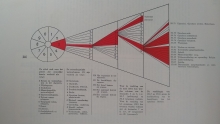
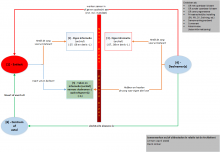

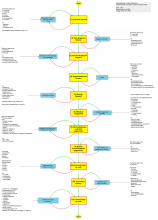




































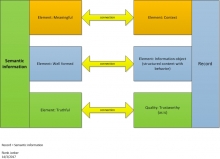
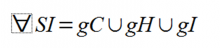
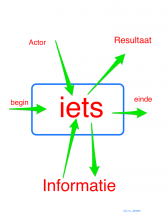
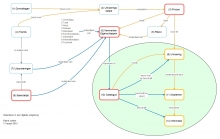
_EN44f1.png?itok=cRGbEwb8 "Three constants and two connectors")
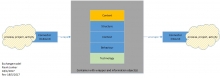


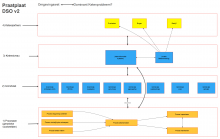
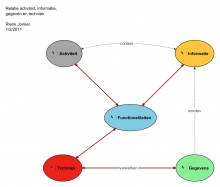
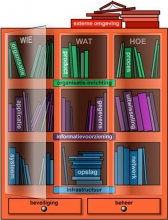
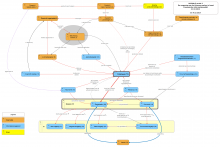
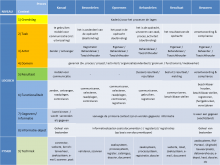
%20-%20Een%20model%20in%20een%20oogopslag%20v3a411.jpg?itok=L32iB5mP "Informatiemodel - Context in lagen")






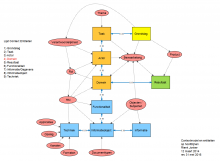

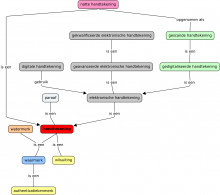
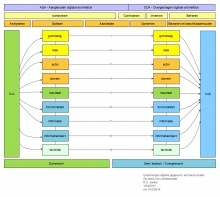
77a5.png?itok=oF9yYrlA "3 konstanten")

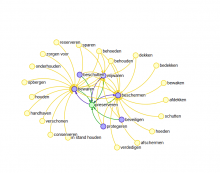
















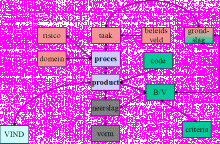








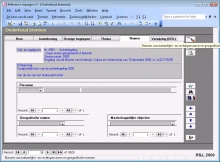
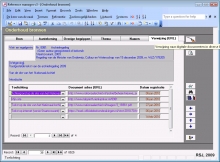
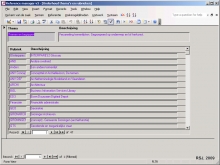

























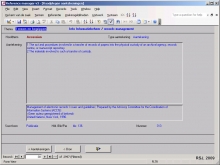
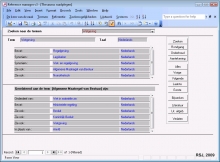
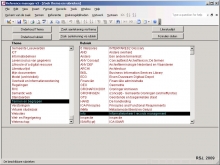
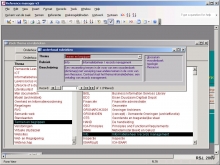
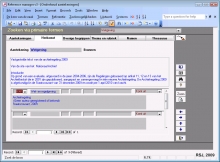
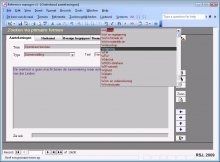
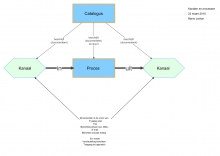
%5d%2014-2-2010%201027517b7a.jpg?itok=SmxubGMD "Reference manager - [Relatie termen (thesaurus)]")


831b.jpg?itok=FCGCVxqn "αυθεντεω en αυθεντης)")



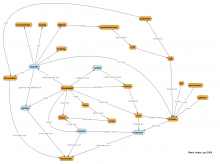































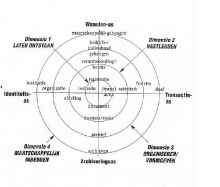




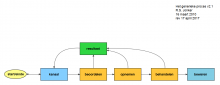
771b.gif?itok=8DxUslHw "Schema records continuum")


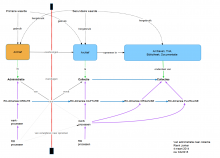
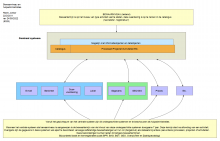
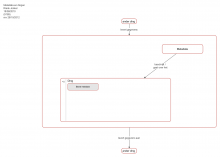





















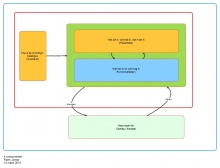
The process of evaluating business activities to determine which records need to be captured and how long the records need to be kept, to meet business needs, the requirements of organisational accountability and community expectations.